
Blog/Maintenance
Motorcycle battery and electrical check after the rains
Hard starts and dim lights? Check your battery, terminals and wiring after the rainy season, before cooler mornings and Undas rides.
The rains are easing and the cooler northeasterly winds are starting to reach Ilocos Norte. It is a good time to check the one part most riders forget until the bike won’t start: the battery. Months of wet weather are hard on batteries and wiring. A few minutes of checking now saves you from pushing your bike on a cold morning, or getting stuck on a long ride home for Undas.
Why the rainy season is hard on your battery
Water and humidity cause corrosion on the terminals and connectors. Short trips in the rain with the headlight always on mean the battery rarely gets a full charge. Bikes that sat parked during storms slowly drained too. Most motorcycle batteries also lose strength with age, and the weak ones tend to give up when mornings get cooler.
Modern scooters like the Click, NMAX, Aerox, PCX and ADV rely on the battery for fuel injection, the ECU and often a push-button start with no kick starter. A weak battery can mean no ride at all.
Signs your battery or electrical system needs attention
- The starter turns slowly or just clicks when you press the button.
- The headlight dims a lot when you start the engine or sit at idle.
- The horn sounds weak or rough.
- The dashboard flickers or resets when you start the bike.
- The engine starts in the afternoon but struggles in the early morning.
- White or green powder on the battery terminals.
- A swollen or cracked battery case, or a smell of acid.
- Lights or turn signals that work only sometimes.
A simple at-home battery check
You don’t need special tools for a first look. On most scooters the battery is under the seat or behind a panel in the floorboard. On underbones like the Sniper, Raider and Mio, check under the seat or side cover.
- Make sure the terminals are tight. A loose terminal can act just like a dead battery.
- Clean off any corrosion with a dry brush, then wipe the terminals clean.
- Check that the battery is held firmly and does not move around.
- Look at the wires near the battery and fuse box for cracks or melted insulation.
- If you have a multimeter, a healthy battery at rest reads about 12.6 volts. Below 12.2 volts means it is weak or discharged.
If the battery keeps going flat even after a long ride, the problem may be the charging system, such as the regulator or stator, and not the battery itself.
Don’t forget the lights and wiring
Days are getting shorter, so you will ride in the dark more often. Walk around your bike and test the headlight on high and low beam, the tail light, the brake light from both levers, and all four turn signals. Check the horn too.
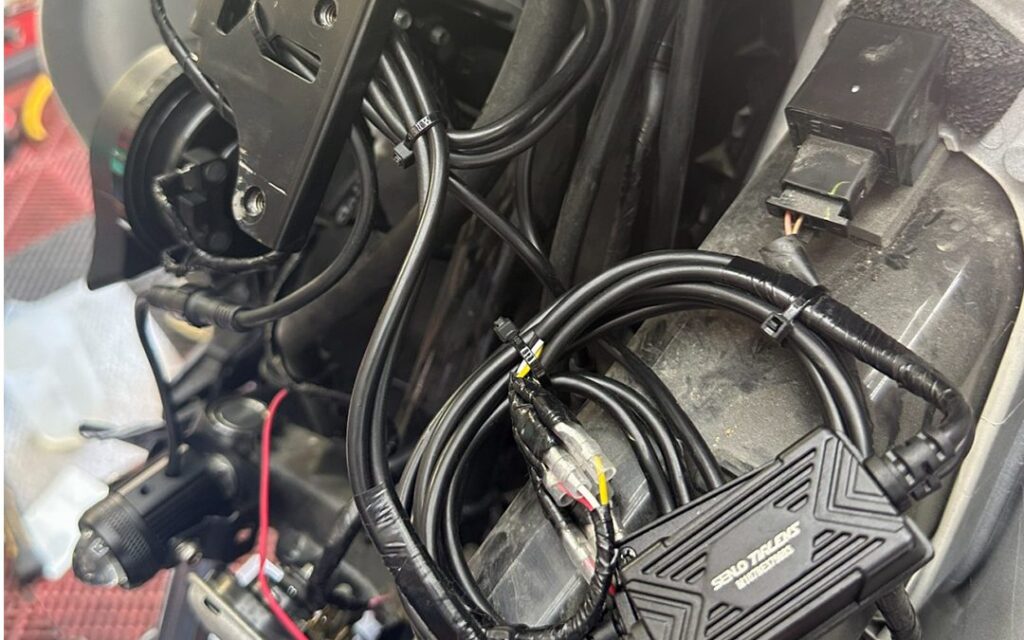
Many riders add auxiliary lights, USB chargers or phone holders with power. Poorly installed accessories are a common cause of battery drain and blown fuses. If you added something and your battery started dying, have the wiring checked.
Get your electrical system checked at MotoNorte
If your bike is slow to start, shows a warning light or keeps draining its battery, bring it in. We do computer diagnostics and sensor and electrical checks to find the real cause before replacing any parts, and we give you a clear repair plan and price before we start work. We also install auxiliary lights and accessories properly.
Walk in to our shop in Batac City or book online. Get your bike ready for cooler mornings and the long ride home for Undas.