
Blog/Safety
Flooded road ahead? How to ride through water safely
Heavy rain may hit Northern Luzon this week. When to avoid floodwater, how to cross safely, and what to do if your motorcycle stalls.
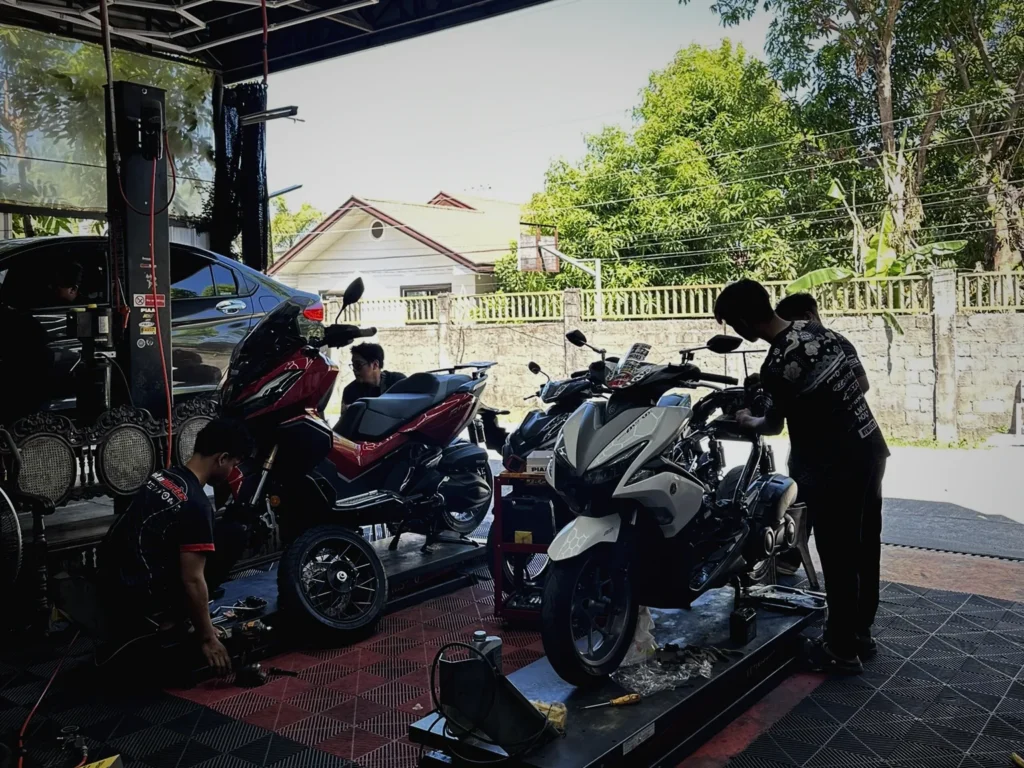
PAGASA is tracking Typhoon Champi, which is expected to enter the Philippine Area of Responsibility this week as Rosal. Its track points toward Taiwan, but it may still bring heavy rain to Northern Luzon. That means flooded roads, especially in low spots around Batac, Laoag and the barangay roads. Here is how to decide if you should cross, how to ride through safely, and what to do if your bike stalls in the water.
Should you cross at all?
The safest answer is often no. Floodwater hides potholes, open canals, rocks and debris. It can also be deeper and faster than it looks. Wait it out or take another route if you see any of these:
- The water is above the middle of your wheels or near the floorboard.
- The water is moving fast or pushing debris along.
- You cannot see the road edge, the center line or the curb.
- Cars and jeepneys are stopping or turning back.
- It is dark and you do not know the road well.
Scooters like the Click, Mio, NMAX, Aerox and PCX sit low. Their air intake and CVT case are closer to the water than on an underbone or a big bike. A depth that a Raider or ADV can handle may already be too much for a small scooter.
How to ride through shallow water
If the water is shallow, calm and you know the road, cross with care.
- Watch another vehicle cross first, so you can see how deep it is.
- Pick the highest part of the road, usually the center.
- Ride slowly and steadily in a low gear. Do not make a big wave.
- Keep the throttle steady. Do not stop or close the throttle in the middle of the water, because water can enter the exhaust.
- Do not follow too close behind a truck or car. Their wake can push water over your engine.
- Keep your feet on the pegs or floorboard unless you need to balance.
Right after you cross
Wet brakes do not grip well. Once you are out of the water, squeeze both brake levers lightly a few times while riding slowly to dry the pads. Test your brakes before you speed up. Mud on the tires also reduces grip, so take the first few corners gently.
If your bike stalls in the water
This is where most expensive damage happens. Riders try to restart the engine again and again. If water got into the air box or cylinder, cranking the engine can bend internal parts.
- Turn the ignition off and do not press the starter.
- Push the bike out of the water to higher ground.
- Do not try to start it until it has been checked.
- Look for water in the air filter box, in the exhaust, or milky oil in the oil window.
- If you are not sure, have it towed or pushed to a shop.
On scooters, water in the CVT case can make the belt slip and wear out fast. On bikes with a chain, floodwater washes the lube away and brings in sand and rust. Wet wiring and connectors can cause problems days later, not right away.
Bring it to MotoNorte after a flood
If your bike went through deep water, stalled, or starts acting strange after the rains, bring it in before small problems get bigger. We check the engine oil, air filter, CVT, brakes, chain and electrical system, and we explain what we find and the price before we start any work.
Walk in to our shop in Batac City or book online. Stay safe this week, and avoid flooded roads when you can.